The Seat
The Seat is a bench on the Canal Embankment in Petersburg, the single most important location in the story. It is where the Dreamer first encounters Nastenka on a white night, where she later tells him her history, where they wait for the Lodger, where the Dreamer confesses his love, and where the Lodger finally returns. The Seat thus becomes the spatial container for the entire romance—its beginning, its middle, and its end—and the place where the Dreamer's fantasy collides with reality.
Location and First Encounter
The Seat is situated on the Canal Embankment, a remote part of town where at ten o'clock at night one rarely meets a soul. The Dreamer, returning from a walk in the countryside, finds Nastenka leaning on the canal railing, apparently looking at the muddy water. She is crying. When a drunken gentleman pursues her, the Dreamer intervenes with his knotted stick, and she takes his arm. They walk and talk, and at the end of the evening she tells him she must go home, which is only two steps from the embankment. Before parting, she agrees to meet him the next evening at the same hour on the same spot. The Seat is thus established as the designated meeting place for their second encounter.
The Seat as Confessional Space
On the second night, the Dreamer and Nastenka sit on the Seat, and he delivers his long, self-lacerating confession about being a dreamer. She listens with amazement, opening her eyes and her little mouth. After he finishes, she tells him her own history—the story of the Lodger, the grandmother's pin, the secret meetings, and the promise of marriage after a year in Moscow. The Seat becomes the stage for mutual revelation: he confesses his entire way of life, she confesses her love for another man. It is also where they agree on the plan for her to write a letter to the Lodger, and where she hands the Dreamer the sealed letter, already written, to deliver.
Waiting and the Third Night
On the third night, the Dreamer arrives at the Seat a full hour early, but Nastenka is already there. They wait for the Lodger, who does not come. The Seat becomes a place of anxious expectation. Nastenka grows increasingly distressed, and the Dreamer tries to comfort her with arguments and proofs. When the clock strikes eleven from a distant tower, she admits he will not come that night. They agree to meet again the next evening. The Seat is now charged with the tension of unfulfilled hope.
Confession and the Lodger's Return
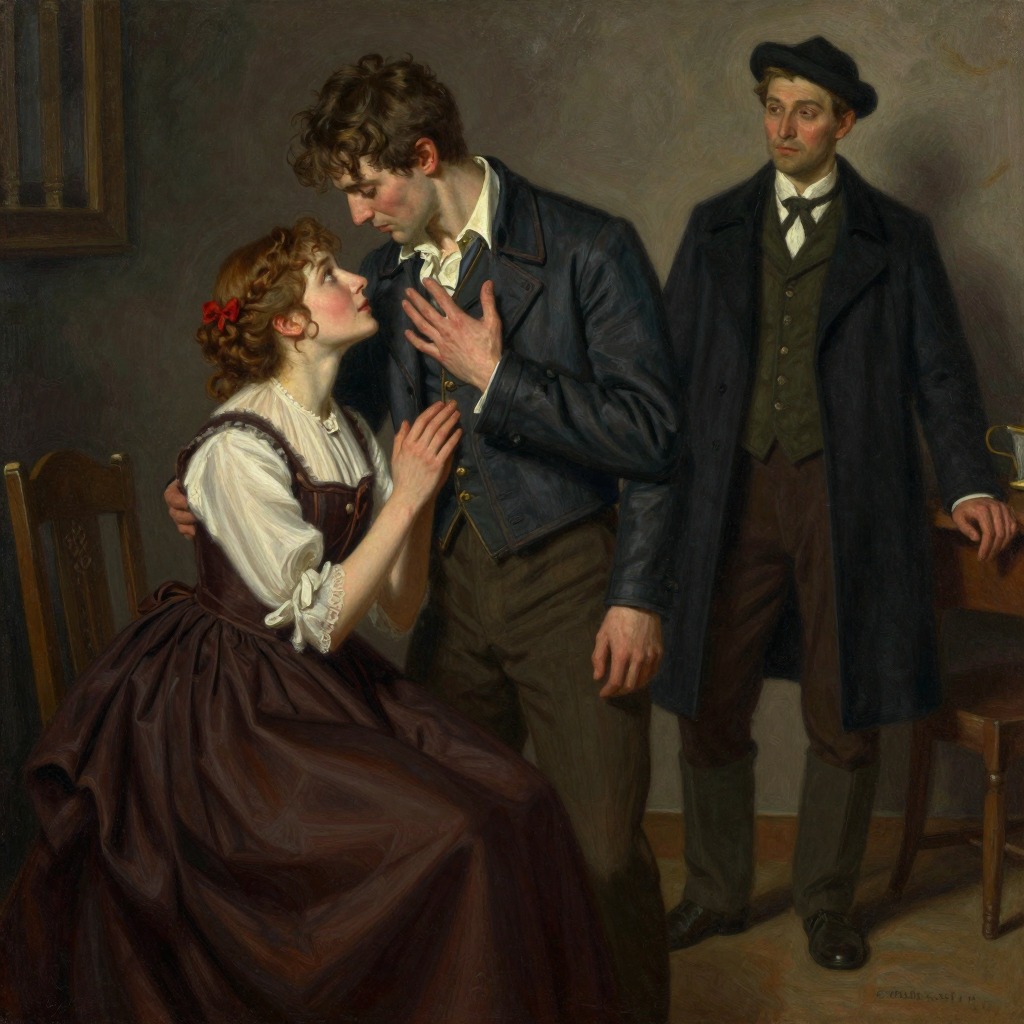
On the fourth night, the Dreamer arrives at nine o'clock and finds Nastenka already standing by the railing, her elbows on the rail, as on the first night. When he tells her there is no letter, she breaks down. In her despair, the Dreamer confesses his love for her. She initially rejects him, then, after a long emotional struggle, accepts his love and they plan a future together. As they walk away from the Seat, the Lodger suddenly appears. Nastenka cries out, tears herself from the Dreamer's arms, rushes to the Lodger, and then returns to give the Dreamer a warm, tender kiss before drawing the Lodger away. The Seat is thus the site of both the Dreamer's greatest happiness and his most crushing loss.
Aftermath and Thematic Significance
The next morning, the Dreamer receives a letter from Nastenka, written from her home, in which she asks for forgiveness and announces her marriage to the Lodger. The Seat itself is not mentioned in the letter, but the entire narrative has been anchored to it. The Seat is the physical counterpart to the Dreamer's inner world: a fixed point in the city where his fantasies meet the actual course of events. It is where he first hears her sob, where he first speaks to her, where he confesses his love, and where he loses her. The Seat thus embodies the story's central theme—the brief, intense happiness of a white night that cannot be sustained. The Dreamer's final blessing, "May your sky be clear, may your sweet smile be bright and untroubled," is spoken not at the Seat but in his room, yet the Seat remains the place where that blessing was earned through the full arc of love, hope, and renunciation.